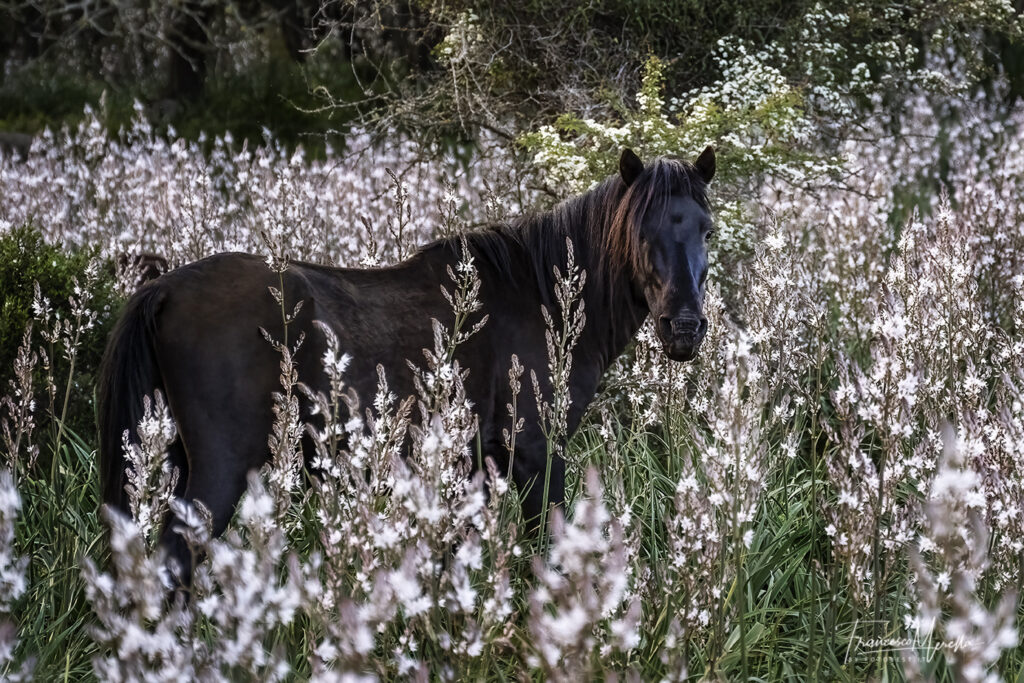
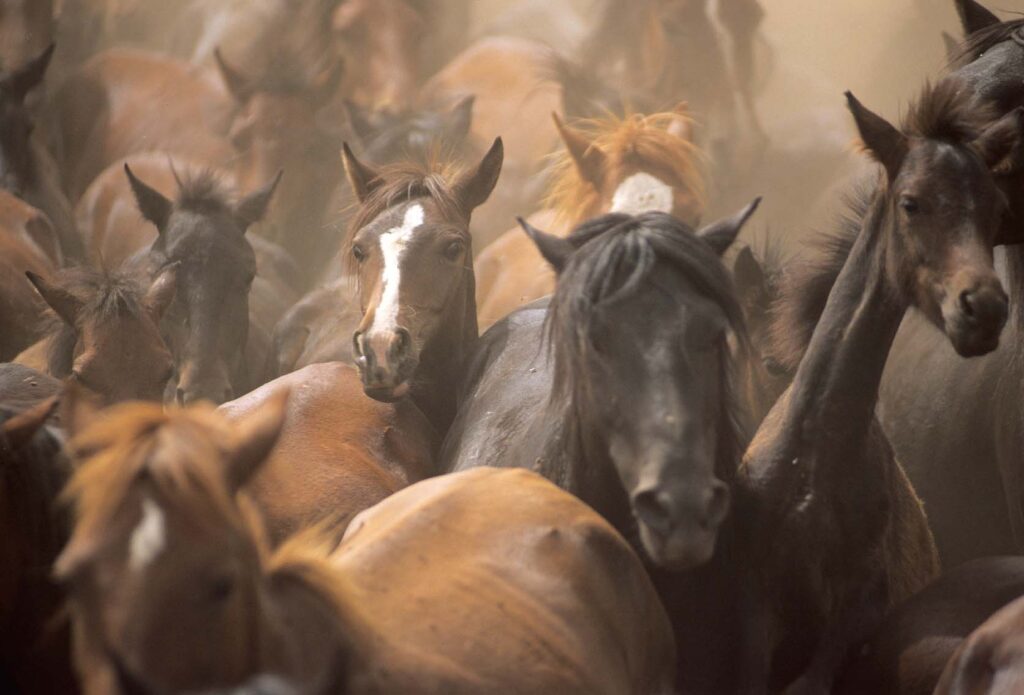
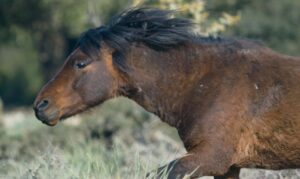
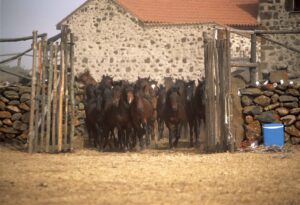
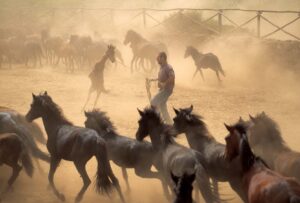
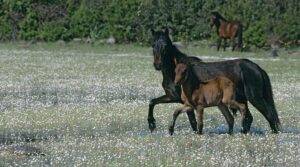
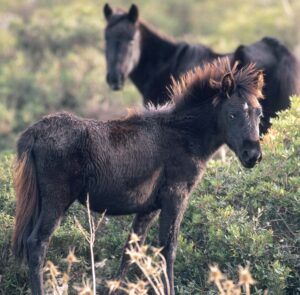
Today, there are between 450 and 650 horses in the plateau that are subject to public care and protection. 80% of the heads are brown, with black coat, mane and tail; then there is the baio, brown, and sauro, reddish. They eat what nature offers them, like buttercups. Their life expectancy is fifteen/ twenty years.
In Sardinian they are called cuaddedus or achettas. Their characteristics are: square head with large almond eyes; strong neck; trunk gathered; short and narrow rump; tail with low attachment and thick horsehair; barrel-like belly; little muscular thighs; thin limbs with long shanks and small cloven legs suitable for the stony ground; Abundant tuft on the forehead and very rich mane. The small size (1.25-1.32 meters at the withers) is a peculiarity due to the difficult living conditions, consanguinity or natural selection. In the past, specimens were known to be less than one meter tall: Procopius of Caesarea writes about horses as tall as a sheep.
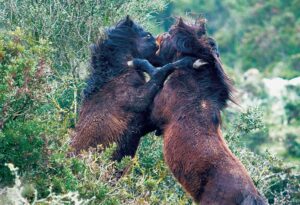
The horses live in packs of eight to nine individuals: the females, the foals and the dominant male who guides, commands and defends their group. Each harem occupies a well-defined territory. The role of leader is taken by a young male after a violent duel, made of kicks and bites, which ends only when the rival abandons the fight and moves away. In spring, the season of love, challenges to bring new fillies back into your group are rekindled: courtship rituals are long and complex. The pregnancy lasts about eleven months; the birth always coincides with the beginning of the summer season. The stallion drives away foals from their third year of age, now sexually mature, to force them to create another family unit.