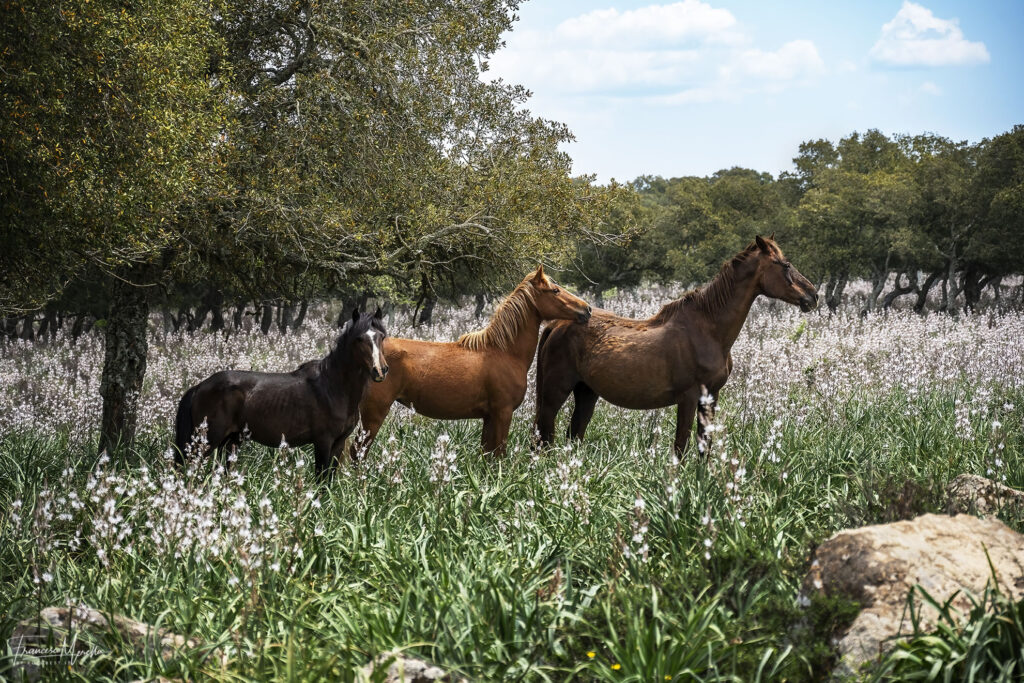
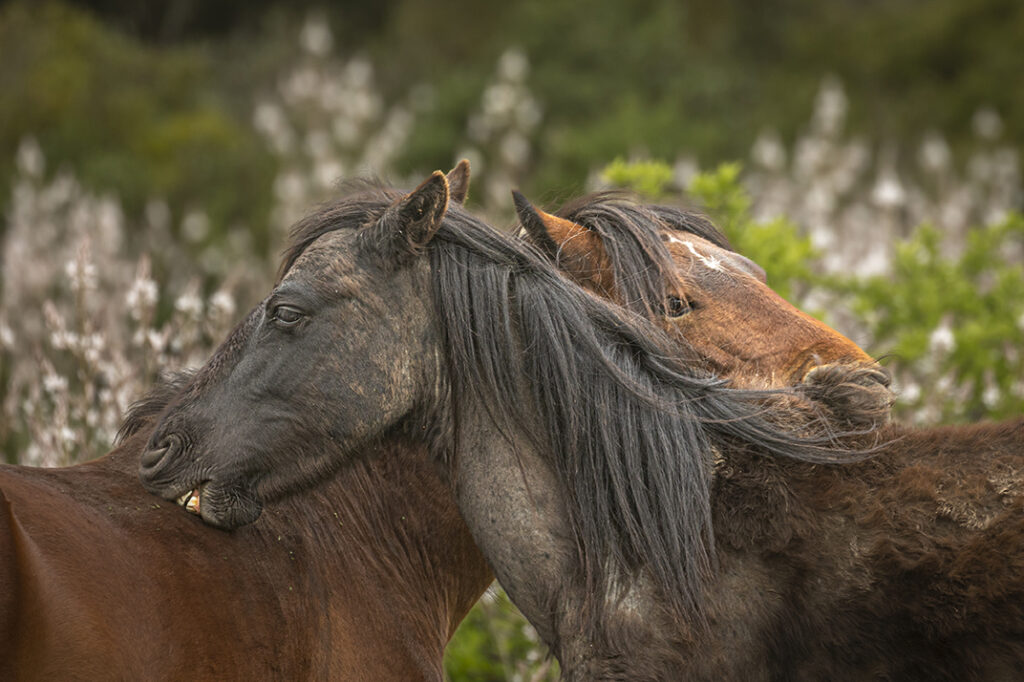
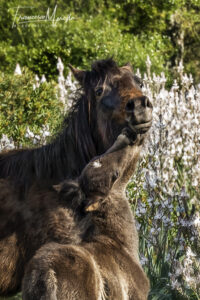
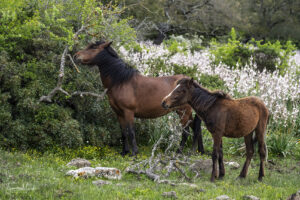
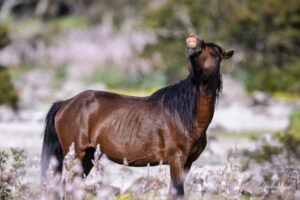
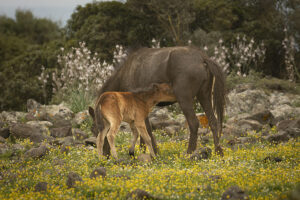
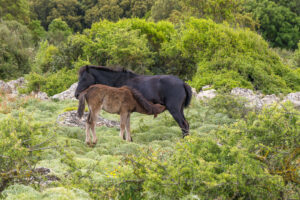
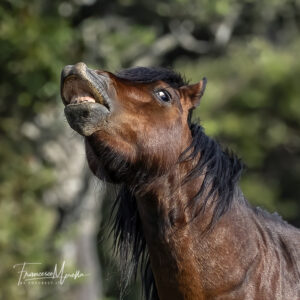
The Giara horse (equus caballus jarae) is not native: the oldest bone finds found on the island date back to the early Iron Age. In the Middle Ages this species populated the whole island, but today we can see them only on the plateau where isolation has allowed the preservation of its most famous characteristics.
Despite the status of wild horse, in the past they belonged to local families who, with the practice of marking, attested their ownership. They used them mainly for threshing, in that period they were caught and taken to the valley and not infrequently they were rented from farmers of other countries of the Marmilla and the Campidano. During the stay in the plain, the selection of animals was carried out: old horses and males were sold, while the animals destined for the perpetuation of the breeding, once the stubble had been exhausted, were returned to the jar.
They were the subject of a flourishing market involving Campidano traders suppliers of local slaughterhouses and farmers who bought them for towing and agricultural work. The market also extended to the continent. From the 1940s onwards, the number of heads decreased due to the food crisis linked to the war and the introduction of mechanical threshing. They are then used for saddle and slaughter.
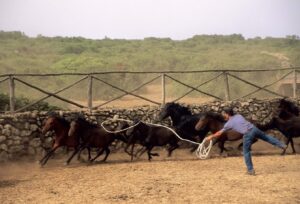
To avoid a further decrease in the number of animals, due to slaughter and crosses with foreign specimens, the then Institute of Equestrian Growth of Ozieri (now AGRIS), in the seventies of the twentieth century, started a selective recovery program, to restore primitive characters. Horses were taken to the pens and caught with a lasso (rope): the heads considered sufficiently pure were marked with a “G” (Giara).