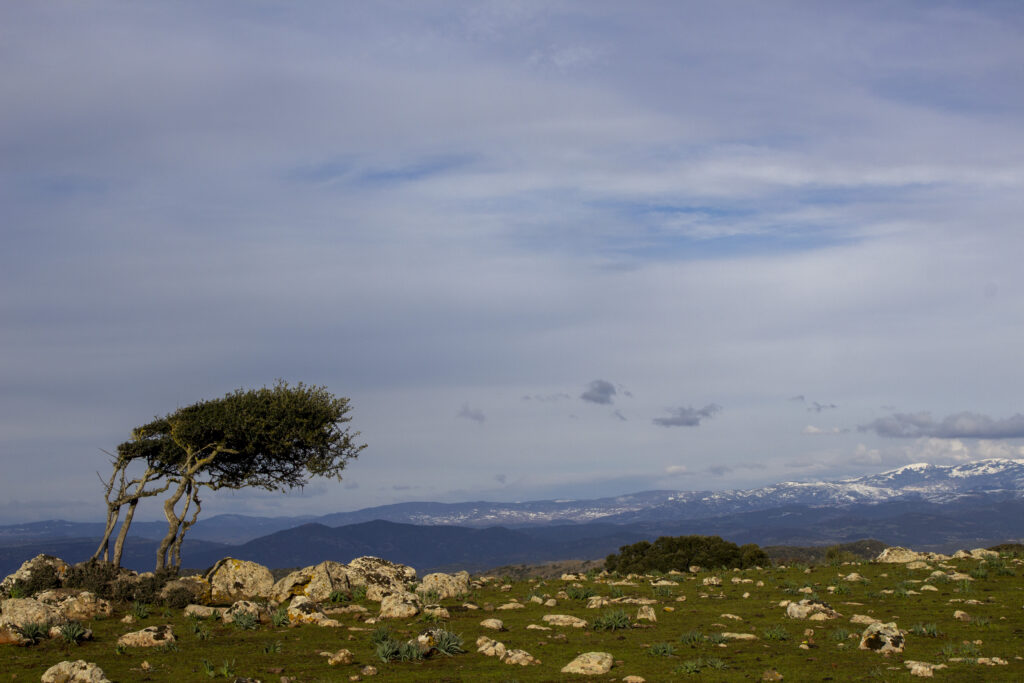
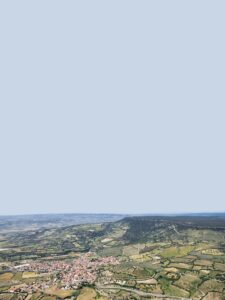
Exploitation of the slopes is determined by the morphology and nature of the soil, slope and altitude.
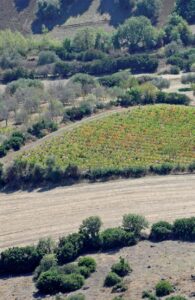
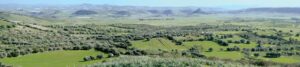
The most evident transformations are recorded at the base of the slopes, where partially bushy pastures alternate with arable land, vegetable gardens and orchards, favoured by the fertility of the soil and the presence of water. At the same altitude, but on the slopes subject to landslide phenomena, patches of woodland or natural high scrub often used as woodland prevail.
Cultivation is mainly located along the southern slopes of the plateau. The basal plane of the slopes is characterised by extensive cultivation, open fields where cereals, fodder legumes and clover are produced. Ascending the slopes are intensive cultivations, almond, olive, small vegetable gardens and fruit trees (pear, peach, plum).
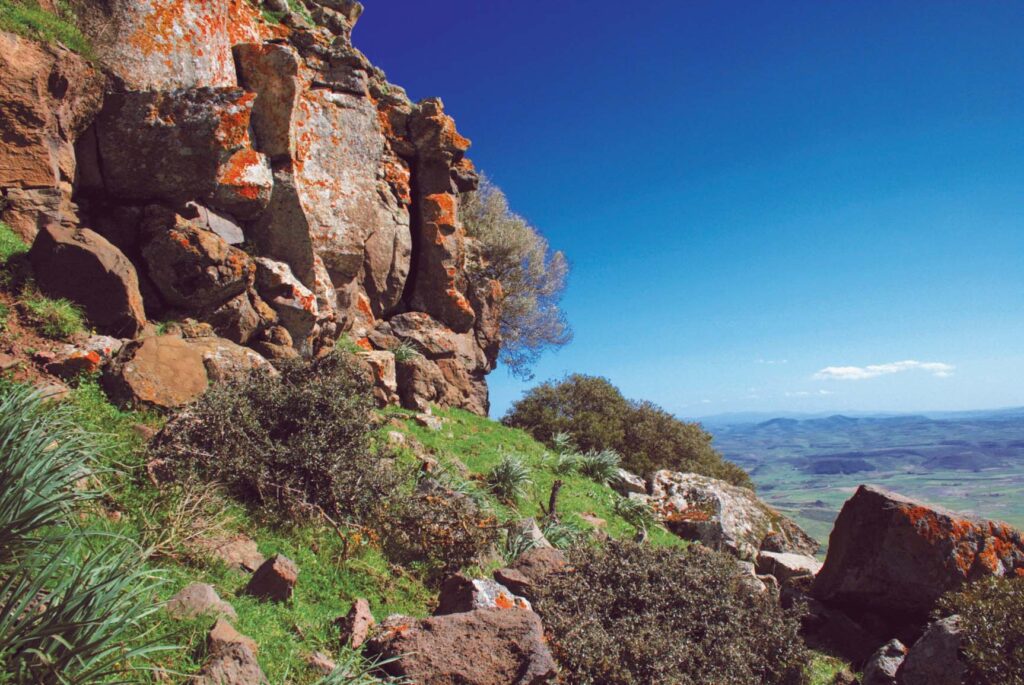
The highest parts of the slopes present a certain uniformity: they consist of very steep cliffs of basaltic rocks that circumscribe the Giara plateau, forming the so-called crown. Rainwater breaks up and deeply incises the rock, shaping small waterfalls; when the water runs out, the incisions are used as access routes to the plateau (scálas). Vertical cracks in the basaltic substrate swallow part of the rainwater, which then gushes out at the foot of the cornice in numerous springs (mitzas). The vegetation consists of holm oaks, tall shrubs, mosses and lichens.
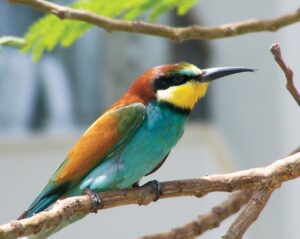
The rocks of the crown are a refuge for many animal species, in particular birds of prey that have become the undisputed rulers, such as buzzards, sparrow hawks and kestrels. The occasional peregrine falcon appears. The imperial raven and the bee-eater also nest among the rocky masses.