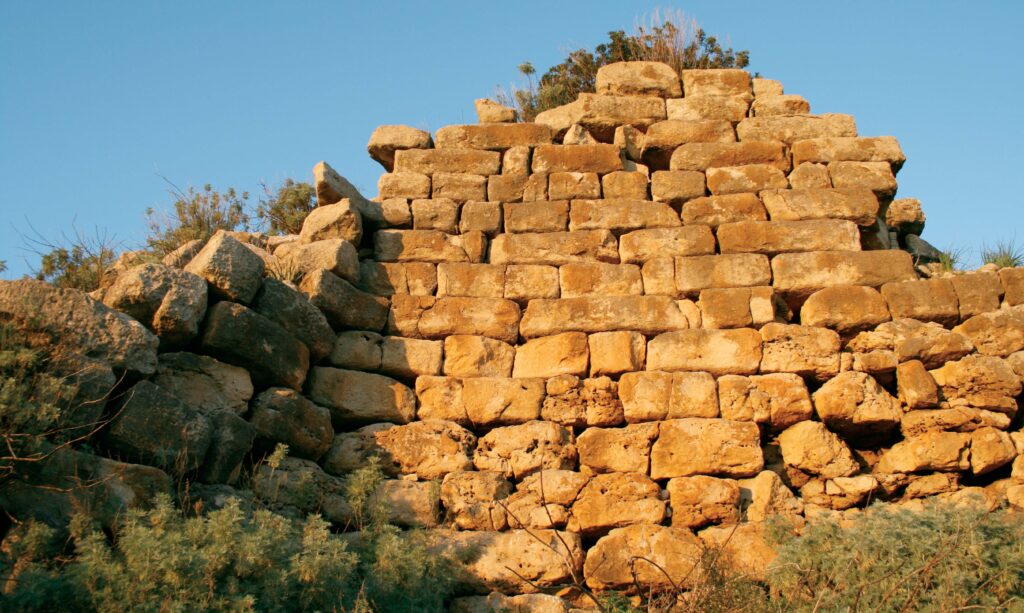
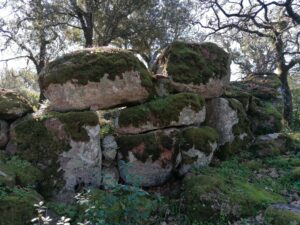
On the Giara, nuraghi are found only on the edge, near the most accessible areas, the scalas, and in places with great control over them to protect the resources present (forest, crops, game and pasture). The nuraghi winds are mainly of type monotorre: there are two complex nuraghi (Perdosu and Su Corrazzu) and only one protonuraghe, Bruncu Madugui; the Nuraghe Taro is a tower-hut.
Nuraghi and villages also dot the slopes and slopes of the Giara: one nuraghe per square kilometre in the territory of Gesturi and assume a greater planimetric variety compared to the plain. These buildings are built with different materials and techniques: the work is dominated by subsquare rows of limestone marl, the use of basalt is frequent, mixed work is rare. There are no shortage of attestations on the plateau of the Jar of the iron age, although they are scarce and can be traced back to the sphere of the sacred.
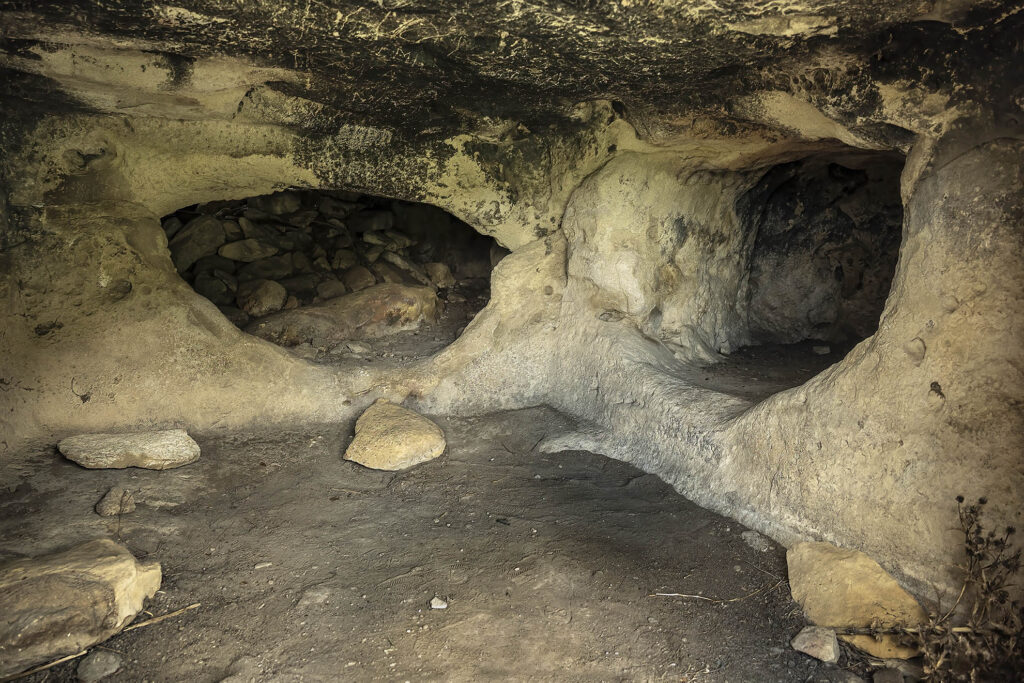
During the end of the Bronze Age, on the plateau and in its surroundings developed numerous villages, with simple huts or built with huts between them leaning and arranged around a central courtyard (on the Giara, Bruncu Madugui and the three unexcavated villages of Scala Parda, Gurdillonis and Scocca Baddicchi). On the plateau, there are eleven villages of huts; in five cases, near the nuraghi, while the others are relatively isolated (Scala Parda, Gurdillonis, Scocca Baddicchi, Sa Corona Arrubia, Bruncu Suergiu).
The land of the plateau, although providing ample resources for pastoral activities, is not suitable for agriculture: the villages depended on other nearby settlements and that is why they were used for a limited period of time and surveys carried out in Gesturi indicate a concentrated population in the slopes and slopes of the plateau.