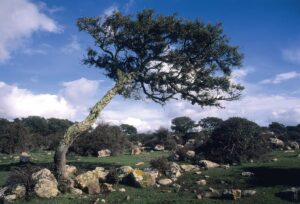
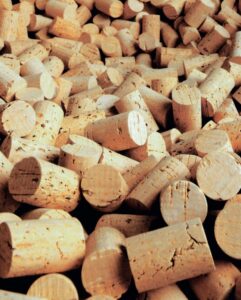
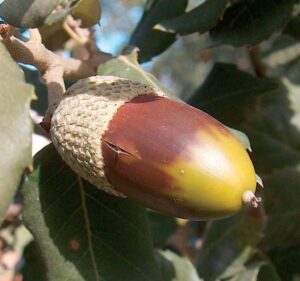
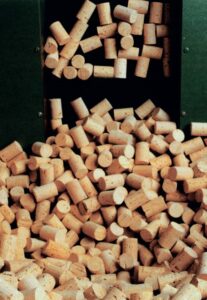
Cork is a protective fabric found in all woody plants, which is only observed in cork oak because it is a layer of considerable thickness. It is produced by fellogen, commonly called “mammina”, to replace the epidermal layers of the cortex that are torn and decay. It is very compact, being composed of numerous cellular layers pressed together; it is extremely light and insulating, since the cells are saturated with air; it is a good waterproof, soft and easily deformable, Having thin membranes.It is therefore a valuable and versatile material increasingly used in various sectors of industry and crafts.
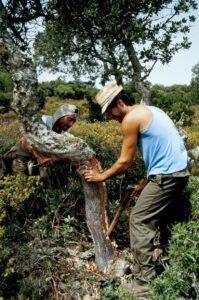
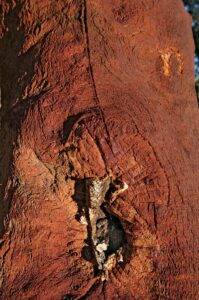
The extraction of cork is carried out by two workers, in Sardinia bogadores (extractors) with pre-industrial techniques, exclusively manual and with traditional instruments (the wedge-shaped handle to penetrate more easily and facilitate detachment; the serramanico knife to remove the cork strips from the sides and the so called splint, a wedge-shaped branch used to remove the cork at the highest points). It is done every 9/10 years, in the morning, during the summer, when it comes off easily. The demashing, the first decortica, occurs when the plant is 15-30 years old and has a circumference of about 50 cm.: it gets the “cork” or “male cork”, of poor quality, coarse and rough. After about 10 years, the “first peel” will be made, the extraction of the first soft or production cork, of low value; later the real cork will be obtained.
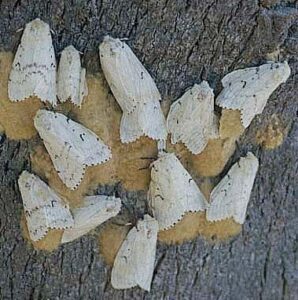
The vegetative decline of recent years is due to drought, pathogenic fungi and defoliating insects (oak processionaria, bombice gallonato and roe) and fires.